Cafe Dahlia


My Role

I assumed several roles in this project: Creative Director, Game Designer and Programmer.
My main tasks were:

  • Created and defined the game concept, main story, characters, genre, world and mechanics.
  • Applied for and secured government funding from the Ministry of Cultures and Heritage to develop the initial prototype (Pre-Production)
  • Led the fully remote development team as Creative Director, tracking their tasks, planning and ensuring we delivered on time.
  • Served as the main engineer, defining the architecture and implementing the systems and mechanics as well as integrating assets into the game in Unreal Engine 5 with C++
  • Worked closely with the Narrative Designer and writer to shape the final story and characters
  • Conducted periodic meetings with each team and with all the teams to align ideas, get feedback, test the game and collaborate.
  • Managed communication with the external company providing art and design consulting services.

I submitted this game concept to the Pro Helvetia South America Artist Residency and was selected. I spent 3 months in Switzerland developing a game prototype, exchanging ideas and collaborating with Swiss game developers and participating in events, demo days and talks.

By the time I traveled, though, Cafe Dahlia was in a more advanced stage, so we decided it was best to work on Distress Call instead, since that project was in an earlier stage.
The Game

UE5 / C++

TECHNOLOGY

8

TEAM SIZE

9

DEV. TIME (MONTHS)

PC

PLATFORM

Features

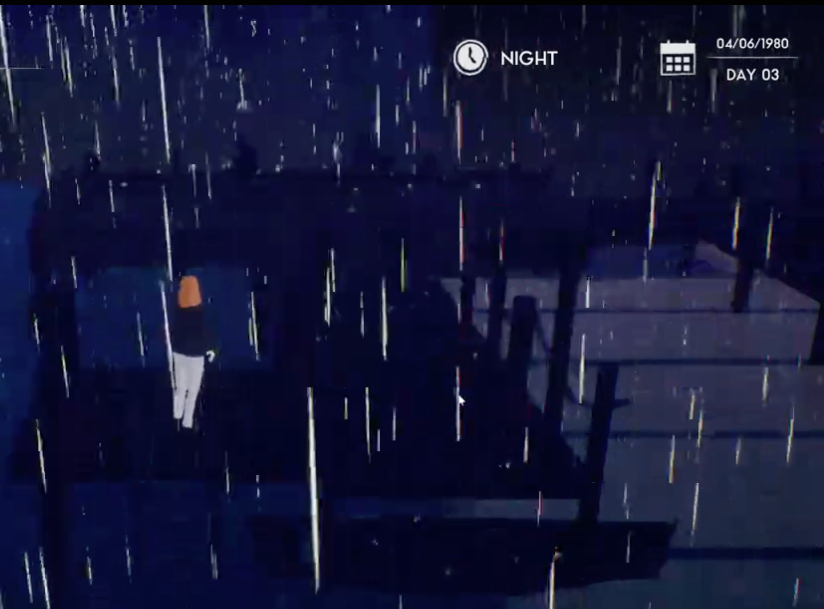
  • Gut-wrenching narrative. As a detective, you explore the tragic events that changed the fate of a mysterious coastal town.
  • Time travel. Unravel the story by linking clues from the past and present.
  • Redemption arc. You join Sarah on a personal journey of self-discovery.

Goals

  • Create a complete, professional-quality game with Unreal Engine 5 and C++.
  • Use mechanics to tell a story about love and tragedy.
  • Explore the noir aesthetic visually and musically
  • Lay the foundation for reusable systems that Raincup Games could use in other projects

Constraints / Risks

  • Limited experience with Unreal Engine and C++
  • Limited experience with narrative games and dialogue writing
  • I held several roles which led to burnout


Key Design Points

Curiosity-led Exploration and Investigation


Mission: Satisfying curiosity drives the player's desire to learn more about the world.

Strategy

One of the main inspirations for this specific game pillar is the game Outer Wilds.

The goal was to make the player want to know more.

The main mechanics that were designed to satisfy this goal are:

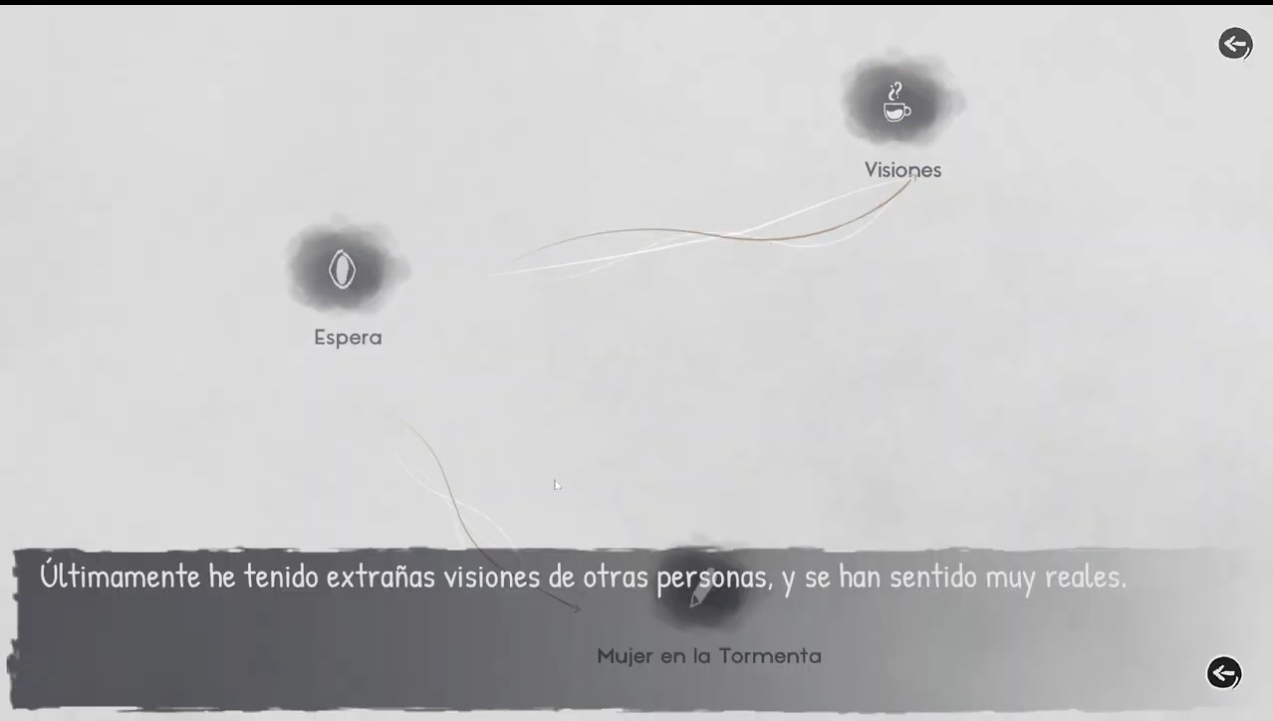
  • Clues and Mind Map. Certain key actions and conversations would trigger a new node in the detective's mind map. The game does not explicitly identify these triggers; instead, the mind map offers hints through potentially related characters or places.
  • Time Travel. In order to uncover the story, the protagonist inhabits the body of one of the 3 main characters from the past. Each character has a different point of view, dialogue and set of available locations, which also vary by day and time of day.

Writing and dialogue were, of course, a key part of this pillar. That's why I hired a writer to help shape the actual dialogue, while I learned from him.


The key is talking with people


Mission: Make the social interactions an important part of the puzzles

Strategy:

Dialogue and its variations are among the most important features of the game.

Some characters have dialogue variations based on combinations of:

  • Which character you are playing (Sarah or one of the 3 characters from the past)
  • Whether you are in the past or the present
  • The time of day (morning, afternoon or night)
  • Which nodes you have unlocked in the mind map

To express the value of all these dialogue variations, the narrative depends on the player realizing that talking with people is a game mechanic and a puzzle in itself.

The mechanics that were designed to support this pillar are:

  • Clues and Mind Map. The mind map becomes the main storytelling tool in the game. Some nodes will only fill in after certain conversations. Conversely, some conversations will only be available after certain nodes have been uncovered.
  • NPC Routines. NPCs will move around the city and have different routines. Depending on the time of day they will be in different moods and give different information. The player needs to talk to them to discover these differences.
  • Dialogue. The most obvious mechanic related to inviting the player to talk to the NPCs. Dialogue needed to be compelling, reflect each character's personality, and convey the information required to advance the story and solve the mystery.

At the right place, at the right time


Mission: Create a dynamic world, where the timing and context determine the result of each interaction.

Strategy:

Timing is meant to be a strategic puzzle in itself. Follow the right chain of events to see a mind map branch fully unfold.

Similar to NPC routines, this pillar is heavily inspired by The Legend of Zelda: Majora's Mask

The main mechanics that align with this pillar are:

  • Time Travel. For obvious reasons, using the right time travel portal to see a specific event or talk to a specific character is key.
  • NPC Routines. NPC dialogue, demeanor and actions change depending on their routine.
  • Day and Night Cycle. Closely related to NPC routines. Some NPCs work at night, while others sleep. Some start work at 7 am and will not talk about private things.

Empathy-focused gameplay


Mission: Create a story and characters that the player cares about.

Strategy:

A highly subjective game pillar was added to keep the emotion and characters' strong motivations always in mind while designing their specific paths.

The main part of the game involved in this is of course the dialogue and writing in general.

Beyond that, the game's theme and overall story aim to explore relatable human experiences that players can identify with or empathize with.

Some of these topics are:

  • Insecurities, impostor syndrome, career uncertainty
  • Unrequited love, betrayal, jealousy
  • Strict parents, harsh punishment, loneliness, miscommunication

Finally, dialogue portraits express the characters' emotions, changing with the situation.

Not a groundbreaking feature for an RPG, but an important one for our story. The detective (the player) is also expected to use these facial expressions as clues about what the character is saying.


Technical Achievements

Mind Map System


Designed and implemented a robust reusable mind map system with a hierarchical tree structure.

The system is easily configurable from UE by non-technical people and reads directly from data sources imported from spreadsheets.


Aside from the technical aspect, implementing the UI presented an interesting challenge.

Achieved a scrolling screen that would dynamically display the unlocked nodes depending on the progression data.


Time Travel System


A particularly challenging system was designed and implemented from scratch.

The main features are:

  • Accessible and configurable on an Actor in UE
  • Allows designers to choose the character, whether to travel to the past or return to the present, and the time of day
  • Has different states, so a time travel portal can be disabled but still visible

With this system I got to apply linked lists, pointers and other C++ concepts I had not previously used in Unreal Engine.


Day-Night Cycle and NPC Routines


These two systems are highly interconnected and turned out to be fairly complex.

Routines include tuples with place and time of day. They also specify which dialogue opens when the player interacts with the NPC.

The system knows about the NPC habits through these lists ("goes for a smoke every day at noon") and talks to the behavior tree to trigger the animation and movement required.


The day-night system is fairly straightforward. It accounts for the player pausing the game and cycles between 3 states (Morning, Afternoon, Night).

In the present, the time is continuous, and you can go through the three stages seamlessly.

In the past, the choice is discrete. It's like picking which movie to watch. "I'll check Maya on the morning of day 1".


Main Takeaways


  • The game is far from finished. At this stage, we have a playable prototype of the prologue. Therefore, the most immediate future work is continuing the development.
  • This stage of the development was a success. We completed the prototype with even more content than expected, successfully completed the milestones required by the government funding we got and are ready for the next step. However, all this is pending funding.
  • The project turned out to be much more ambitious than anticipated. The amount of work was quite large and I personally felt burned out after finishing the prototype. This was most likely due to a poor distribution of tasks, with too many roles assigned to me.
  • The remote team worked pretty well. We managed to keep good communication via Discord, hold meetings to answer questions and solve problems and achieve a good general collaborative environment.
  • Technically, this was a challenging project I enjoyed deeply. I got hands-on experience developing real, robust and reusable systems using mainly C++, which I hadn't used in several years.
  • Performance-wise, the game is still at an early stage, and we need to discuss architectural changes and other improvements.